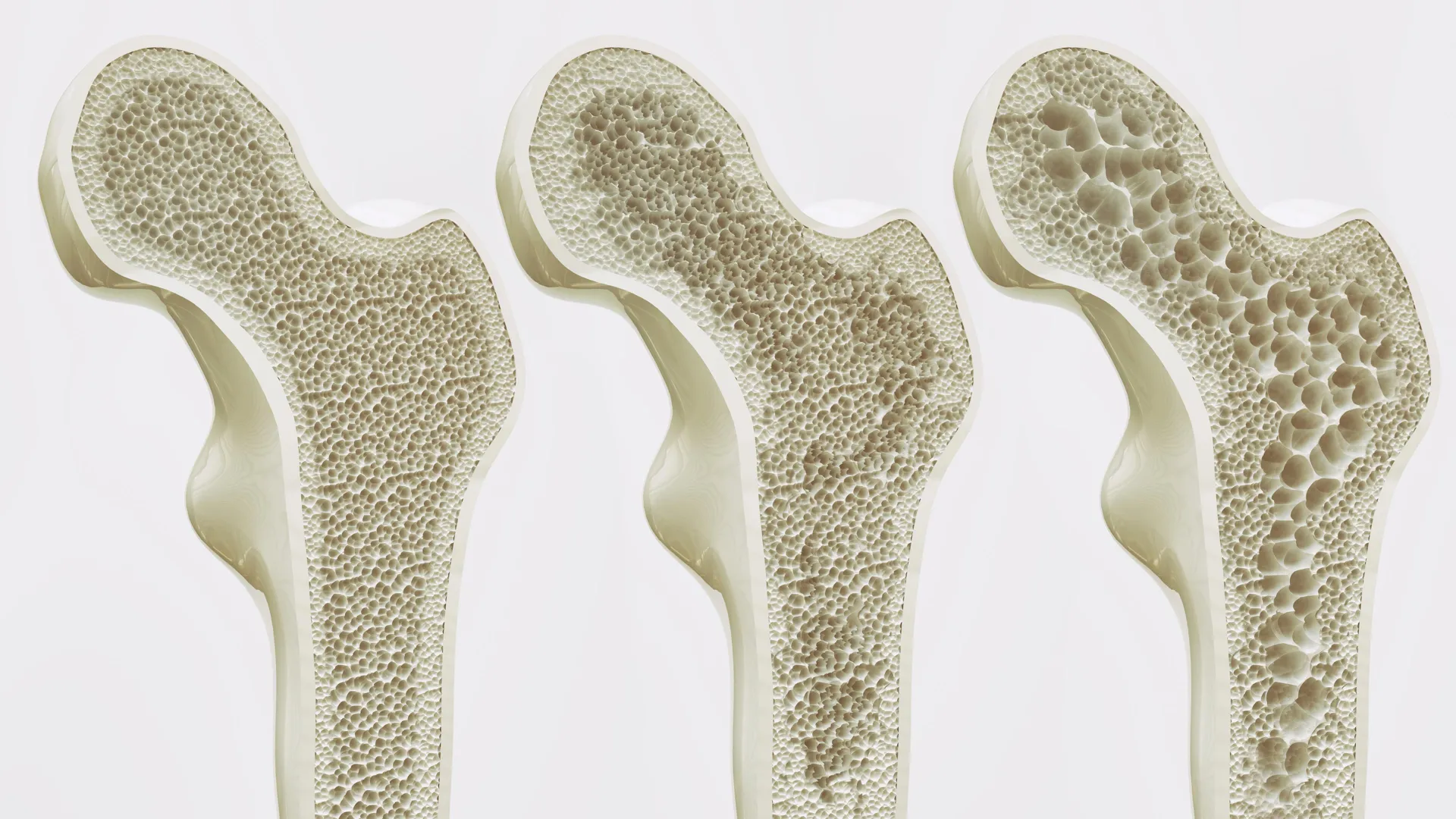
A Johns Hopkins University team published a study in Radiology finding that lower baseline spine bone density was associated with faster age-related cognitive decline and deterioration in brain white matter. The researchers used deep-learning algorithms to analyze noncontrast chest CT images from 2,086 MESA participants. Of these, 715 had the required bone density, brain MRI results, and cognitive test data and were included in the final study group. Lower bone density was associated with greater accumulation of high-intensity white matter lesions in the corpus callosum and a more pronounced decrease in fractional anisotropy in the anterior limb of the internal capsule, the latter indicating deterioration in brain white matter integrity. The study also found that participants with lower bone density experienced faster declines in overall cognitive performance, but the results do not prove that osteoporosis causes dementia. Shared metabolic factors, including insulin resistance, dyslipidemia, and menopausal changes, may affect both bone and brain. The researchers suggest that routine chest CT may provide an opportunity to measure spine bone density incidentally and help identify people who may be at risk of neurological decline.
Source:ScienceDaily · Read Original