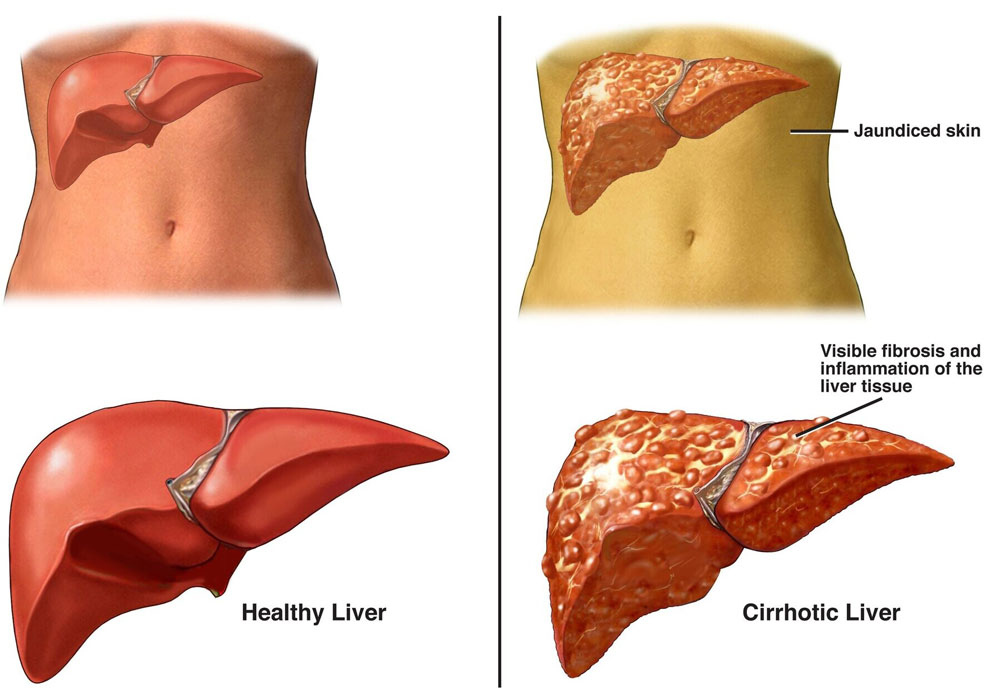
Liver fibrosis is the result of abnormal formation of large amounts of scar tissue in the liver, occurring when the liver tries to repair and replace damaged cells. Liver fibrosis itself does not cause external symptoms, but it can lead to portal hypertension and cirrhosis, which then produce symptoms. Doctors can usually diagnose fibrosis and estimate its severity based on blood and imaging test results, but sometimes a liver biopsy is needed. Treatment includes correcting the underlying cause when possible. The most common causes of liver fibrosis include chronic excessive alcohol consumption, viral hepatitis C and B, and metabolic dysfunction-associated steatohepatitis (MASH, formerly known as nonalcoholic steatohepatitis). If the cause is identified and corrected in time, fibrosis can sometimes be reversed; however, after repeated or continuous injury over months or years, fibrosis becomes extensive and permanent, forming scar bands throughout the liver, namely cirrhosis.
Source:MedlinePlus · Read the original article